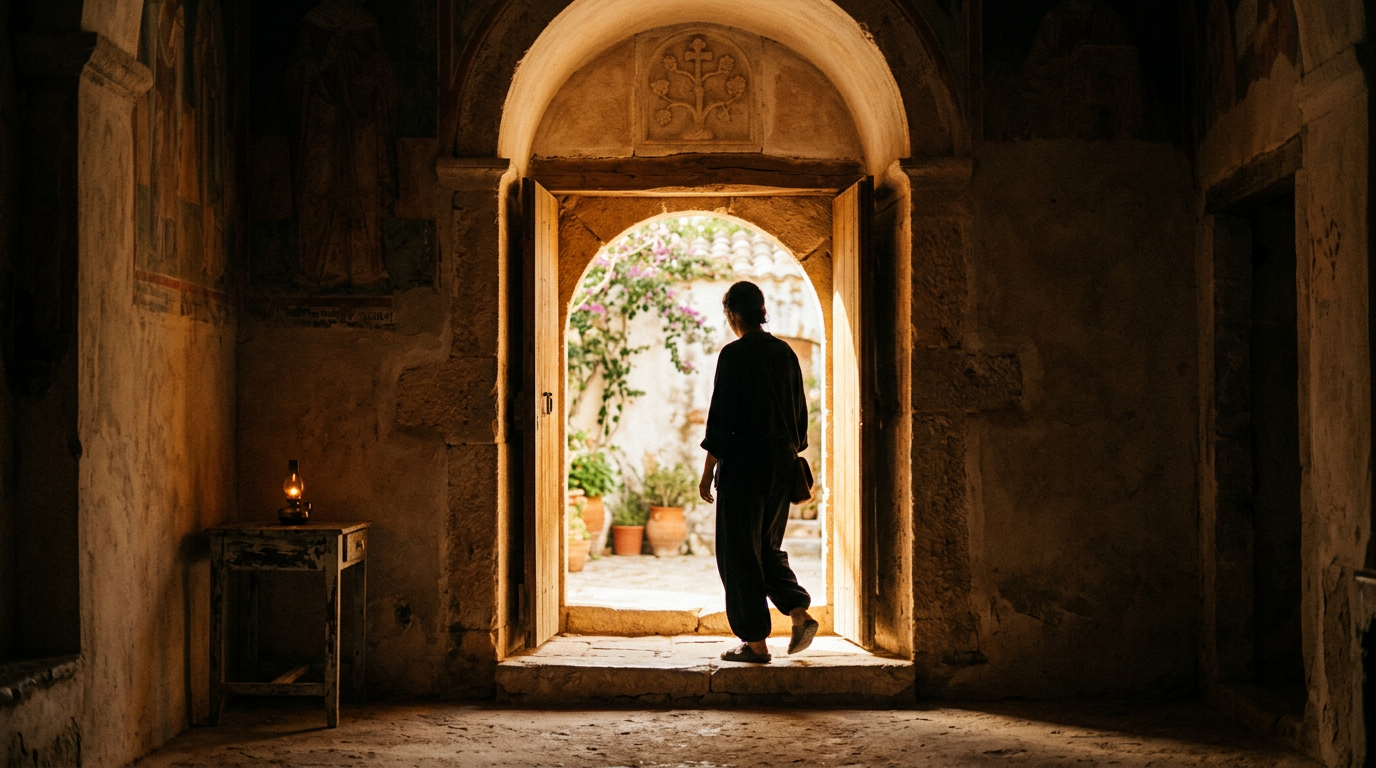
"What we call the beginning is often the end. And to make an end is to make a beginning. The end is where we start from."
- T.S. Eliot, Little Gidding
This week holds three endings in our household.
Friday is my last day at Adobe - eighteen years, thousands of meetings, hundreds of teammates and collaborators who became friends. The goodbye emails have been written. The final conversations have been had. A chapter is closing.
Friday is also Matthew's last day of high school. Four years of early mornings and late-night homework, of friendships forged and tested, of becoming whoever he's becoming. He walks out those doors and doesn't look back.
And next week, Andrew finishes eighth grade. Middle school ends. High school begins. The last of our boys crosses that threshold.
Three endings. One household. One week.
I've been sitting with Eliot's words: "The end is where we start from."
There's something about endings that clarifies. When you know something is finishing, you see it differently. You notice what mattered. You recognize what you'll carry forward - and what you'll leave behind.
At Adobe, people said kind things in the farewell messages. They said I was a good leader. That I made space for people. That I listened. That I helped them grow. I wrote those words down, not because I'm sure I deserve them, but because I want to grow into them. The gap between who people think you are and who you actually are is the space where character gets formed.
That's what endings offer: a chance to see clearly, and then to begin again with that clarity.
St. Francis de Sales - one of my patrons - understood this rhythm of endings and beginnings. He wrote:
"Do not look forward to what may happen tomorrow; the same everlasting Father who cares for you today will take care of you tomorrow and every day."
There's freedom in that. The ending doesn't have to be frightening, because the Father who held you in what's finishing will hold you in what's beginning. You don't have to figure out the whole next chapter before you close the current one. You just have to step across the threshold.
Matthew is stepping across. Andrew is stepping across. I'm stepping across.
We're doing it together, even though our destinations are different.
I think about what each of us carries forward.
From eighteen years at Adobe, I carry lessons about leadership and presence - about paying attention to people, making space for them to grow, staying curious even when the work gets hard. I carry relationships that will outlast the job. I carry gratitude for what the work made possible and what it taught me.
Matthew carries whatever high school formed in him - the discipline of showing up (on time!), the friendships that shaped him, the slow discovery of what he's good at and what he cares about. He's not the same person who walked in four years ago. None of us are.
Andrew carries the awkward grace of middle school - the years when everything is changing and nothing quite fits yet. He's ready for what's next even if he doesn't know exactly what that means. I'm going to miss the daily rhythm of taking him to school and picking him up - he'll start riding with Suzanne next year.
We all carry more than we realize. The question is whether we carry it consciously - whether we've taken the time to notice what's been given to us before we step into what's ahead.
Gordon Smith, in his book Courage and Calling, writes that embracing vocation in midlife means accepting two realities: "First, we accept with grace our limitations and move as quickly as we can beyond illusion about who we are. Second, it means, positively, that we accept responsibility for our gifts, and acknowledge with grace what we can do."
That's the work of endings. They strip away illusion. They reveal what's actually there - the gifts and the limitations both. And then beginnings invite us to take responsibility for what remains, to build on the foundation that's been laid.
I'm not starting from zero. Neither is Matthew. Neither is Andrew. We're starting from everything that came before - all of it, the failures and the successes, the lessons learned and the ones we're still learning.
The end is where we start from.
There's a temptation to rush through endings. To check the boxes, close the door, and get on to the next thing. But I'm trying to resist that this week. I'm trying to let the endings be endings - to feel the weight of what's finishing, to give thanks for what was given, to say goodbye properly.
Because how you leave matters. It reveals something about who you are. And it shapes how you enter what's next.
Matthew will walk out of that high school on Friday. He won't walk back in as a student. That door closes. But how he walks out - with gratitude or resentment, with awareness or numbness, with a sense of what he's carrying or just relief that it's over - that shapes who he'll be on the other side.
The same is true for me. The same is true for all of us, in every ending we face.
St. Teresa of Ávila - the great Carmelite mystic who knew something about transitions and thresholds - wrote:
"All things are passing; God never changes."
That's the anchor. In a week of endings, in a household of transitions, in a life that keeps moving from one thing to the next - God never changes. The One who was present in what's finishing will be present in what's beginning. The One who formed us through what we're leaving will keep forming us in what we're entering.
All things are passing. Adobe is passing. High school is passing. Middle school is passing.
God never changes.
And somehow, in that unchanging presence, we find the courage to let go of what was and step into what will be.
Friday will come. The endings will arrive. And then Saturday will come, and we'll wake up on the other side - not the same people we were, but carrying everything that came before into everything that's ahead.
The end is where we start from.
Here we go.
Comments
Sign in to leave a comment.